
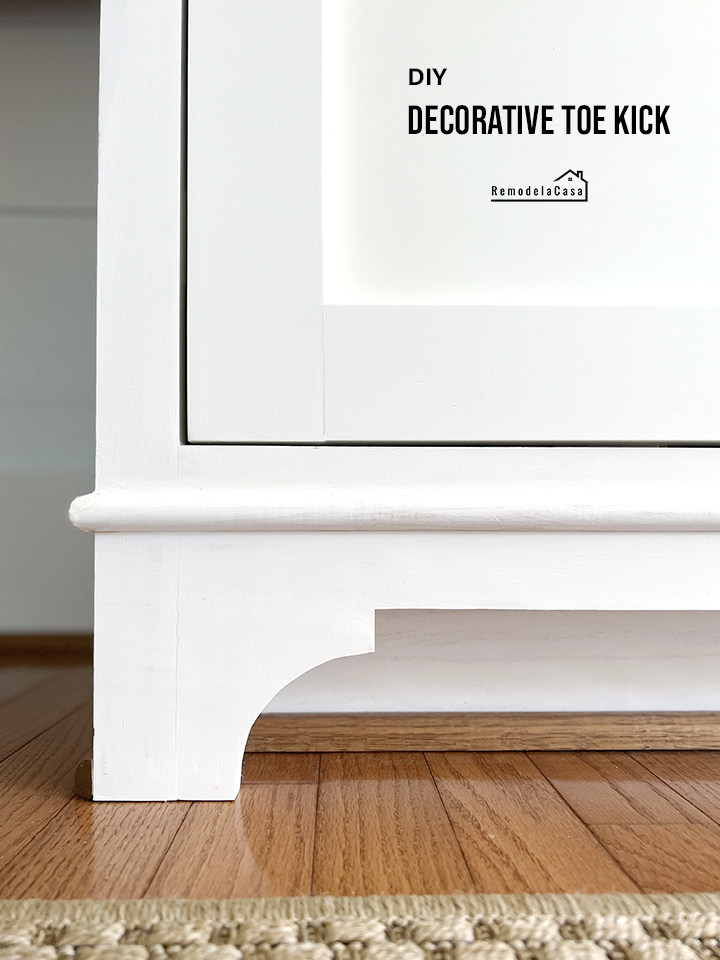
DIY Decorative Toe Kick: Adding Custom Character to Your Built-Ins
Adding a custom decorative toe kick to plain base cabinets is the absolute best way to add instant character to a build. Whether you are working on kitchen cabinets, a family room media center, or—as in my case—a custom-built-in unit for a home office, it’s those small architectural details that make a project look professional.
Back to the Build (and the Reality of DIY)
It’s been a while since my last update on the office built-ins, but that doesn’t mean progress has stalled! In fact, the work itself is exactly why this post is a little late. When we last spoke, the bases were installed, and the face frames were done. I was just starting to play with the idea of a decorative toe kick to level up the look.

Finding Inspiration & Planning the Design
To get started, I went old-school and used graph paper to trace out my design. I was heavily inspired by the gorgeous kitchen you see in the picture below; the entire space was stunning, but my eyes were glued to the intricate toe-kick detail.
I knew I had to replicate that look. I brought my face frames back to the garage to start the transformation.
 |
| Via: MOLLIE JOHNSON |
Overcoming the "Rookie Mistake"
In the original build, I used 1x2s for the entire face-frame. However, the decorative toe kick I envisioned needed to be 5½" high. Looking back, I should have used a 1x4 piece for that lower rail from the very beginning.


Cutting the Curves: Tools & Technique
The decorative part ended up being simpler than I expected:
The Design: I traced a simple, elegant curve onto the wood.

The Cut: I used a scroll saw for the curves. I love how it handles simple arcs.
Straight Cuts: All other cuts were handled quickly on the miter saw.
One specific challenge was that a section of my floor is slightly sunken. I made sure to custom-cut an extra little piece of wood to bridge that gap and keep everything looking level.


Assembly, Sanding, and More Sanding
To assemble the new pieces, I used pocket holes, wood glue, and clamps. I may also have driven a nail or two into the lower section for extra security while the glue dried!

Then came the "fun" part: sanding. Because my cuts are never 100% perfect, sanding is my secret weapon to make everything look seamless.


Final Prep Before Installation
Before the face frames went on for good, I tackled two more tasks:
- Shelf Pin Holes: I had a helper use the Kreg Shelf Pin Jig. It makes drilling perfectly spaced holes so easy that even a kid can do a professional job.

- Base Plates: I added a cleaner-looking plate to cover the "ugly" part of the cabinet base.


Follow the Progress!
I am working hard to get this office project across the finish line. If you want to see the "behind-the-scenes" action and short video clips of the process, follow me over on Instagram! I’ve been posting regular updates there as we get closer to the big reveal.
Check the following links for complete details about this project:


For more Home DIY ideas, check these out:


I LOVE the Elmer's brand wood filler...it sands up so much smoother than other brands. The only problem I have had is that it tends to dry out, even when you put the lid on tight. I have learned to buy the smallest container, knowing it probably won't store well! But even when it is a tad "dry" you can wet it a bit and use it to fill nails holes or even the holes I fill when changing out hardware on furniture. Love the bottom detailing!!! Makes the built-ins look more like a furniture piece and MUCH more custom! Looking forward to the finished project!
ReplyDeleteI think that's the issue with most wood fillers, Beck. I don't know why the covers never close that well. - As they say, the devil is in the detail, extra work, but definitely worth it. Have a great weekend my friend!
DeleteYou did a great job! You are my go-to on how-to. I wish I'd had you here this morning when I was attempting to put the painted doors back on my sideboard. Never had so many screws break midway in.
ReplyDeleteBrenda
Oh, Brenda, I wish I could've been there to help you. How disappointing! Ha, I guess you were driving them into hardwood, maybe oak? Remember to drill pilot holes before driving the screws, buy good quality screws (I'm loving Spax screws lately, they're expensive but their quality is great and you don't even need pilot holes with them), you can also lubricate the screw before driving it - rubbing them on a bar of soap for they to get in the wood smoothly.
DeleteCristina you simply amaze me! Your skills and craftsmanship are superb and love how you include your littles insuring that they too learn so much.
ReplyDeleteI wanted to take a moment and thank you so very much for participating in the past week's tour.
The event brought happiness to many. I received so many messages from individuals who so appreciated all of the wonderful tips, touches and gorgeous images. I am running a round up tour today for any who might have missed a glimpse of the beauty shared.
Your home truly is a bounty of beauty.
Again, my deepest thanks. Have a wonderful weekend.
You are amazing Cristina! I love that little detail and your tutorials are so thorough. And now I need a Bladerunner :)
ReplyDeleteComo me gusta ver a tu hijo ahí con herramientas ayudándote ,, así da gusto trabajar
ReplyDelete